GLANOS BRIEF

Eyewear technology, products, brands and market shifts — plus the latest from GLANOS.

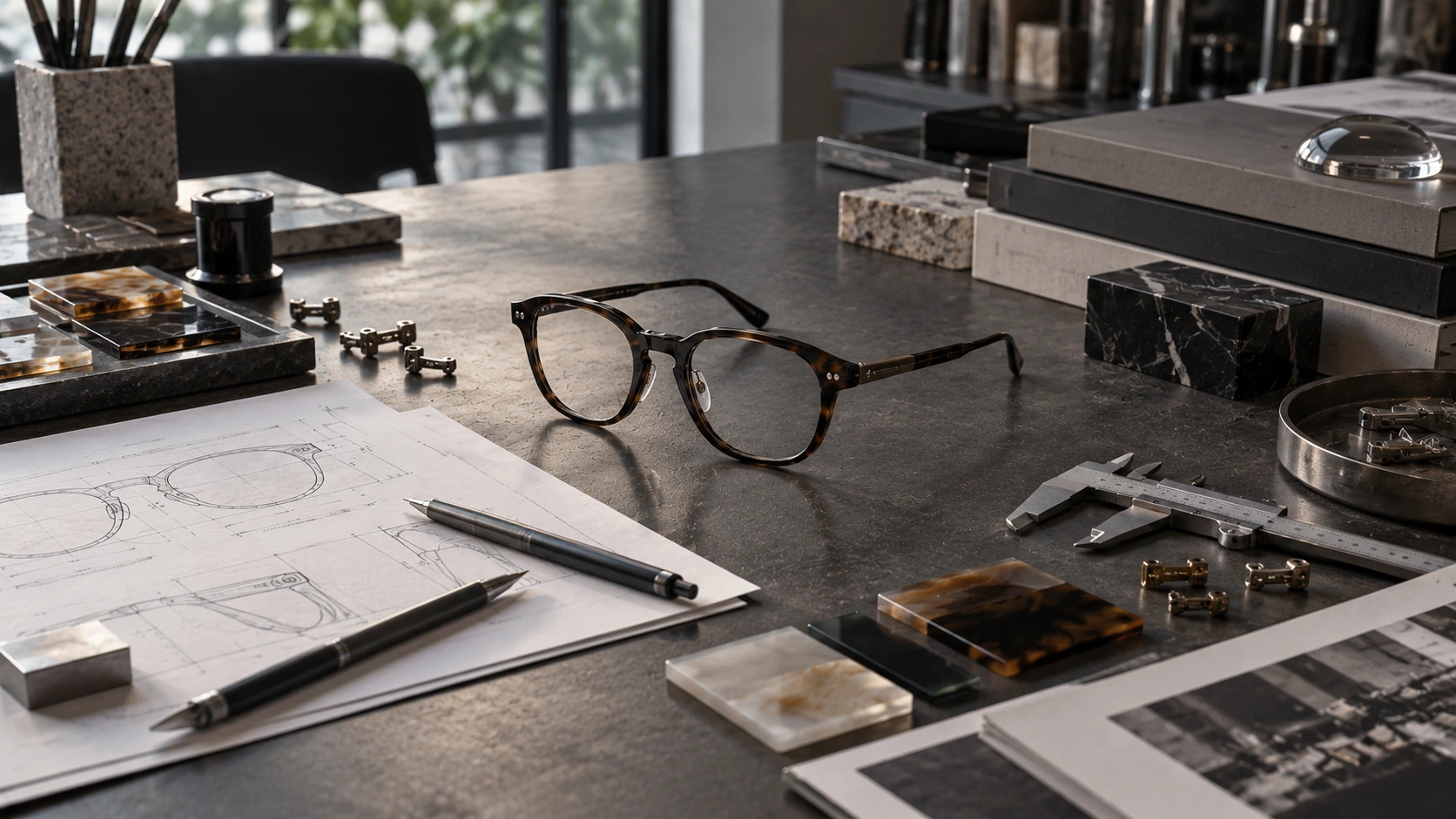
Eyewear workbench with glasses, design drawings, measuring tools and material samples
FIELD

GLANOS 180: Intuitive to use, with icons that could be more distinctive

Two office workers—Lee, in their mid-40s, and Jang, in their early 50s—responded positively to the features and ease of use of GLANOS 180. Both said they could immediately tell what to do and how to proceed, while finding the feature icons visually plain.

BRAND

How Did OWNDAYS Turn Eyewear Buying into a Standardized Service?

OWNDAYS combines standard lenses, fast in-store production, and after-sales service. We examine the operational system and the limits behind headline promises.

INDUSTRY

Why Do Japanese Optical Chains Bundle Frames and Lenses?

Official price guides from JINS and OWNDAYS reveal how bundled standard lenses coexist with very different upgrade prices and progressive-lens conditions.

RESEARCH

How Accurate Is Smartphone Interpupillary Distance Measurement?

A 2024 South Korean study compared four interpupillary-distance methods in 40 adults. We separate average bias, repeatability, and the limits of spectacle fitting.

BRAND

Why Did JINS Add Weight to Its Lightweight Eyewear?

From Airframe in 2009 to Airframe Slim in 2026, JINS has shifted attention from total frame weight to balance after lenses are fitted.

INDUSTRY

Can Optical Stores Take Payments Without a Separate Terminal?

Tap to Pay turns a compatible phone into a contactless acceptance device. We examine support in Japan and Singapore, local dependencies, and the difference between payments and store operations.

INDUSTRY

Are Myopia-Control Lenses Really Just ₩6,000?

What China’s CCTV actually found: a 30-yuan wholesale quote, a suggested retail price, missing clinical trials at some suppliers, and the evidence behind individually studied myopia-control lenses.

BRAND

Gentle Monster, turning the eyewear store into a medium of its own

Founded in 2011 by Hankook Kim, Gentle Monster expanded the meaning of an eyewear store through experimental architecture, moving installations and cross-category experiences. This Brief traces its early retail approach through HAUS DOSAN in 2021 and HAUS NOWHERE Seoul in 2025, alongside sibling brands, Maison Margiela and JENNIE collaborations, and international pop-ups. Product specifications from the 2026 optical range and documented fitting and repair services provide a necessary counterpoint: spectacle and eyewear performance are not the same measure.

INDUSTRY

Why is it so hard for optical stores to hire?

Optical-store staffing cannot be explained by the number of license holders alone. Korean opticians work inside a licensed occupation, while real stores combine consultation, measurement, lenses, fabrication, fitting, repair and operations in one role. Geography, retail schedules, small-team skill concentration and replacement demand from turnover or independence can make individual vacancies harder to fill. This Brief looks at staffing through the system that creates and retains expertise.

INDUSTRY

Why does premium eyewear keep clustering in a few manufacturing regions?

Premium eyewear repeatedly returns to places such as Sabae, the French Jura and Belluno. The reason is less one exceptional artisan than a dense production cluster connecting machining, joining, polishing, plating, components, assembly and training. By comparing these regions, this Brief examines why brands struggle to move production and why historic manufacturing centers still have to renew people, equipment and technical relationships.

INDUSTRY

As eyewear gets more precise, why does fitting matter more?

Personalized lenses, digital centration, face scanning and smart glasses are turning fitting from a final comfort adjustment into part of the optical conditions in which eyewear actually works. Pantoscopic tilt, back vertex distance and fitting height can now feed directly into lens design, yet digital measurement still ends with physical adjustment on a real face. This Brief examines why fitting is becoming a combination of measurement and expertise rather than disappearing through automation.

INDUSTRY

As the smart glasses market grows, will traditional eyewear disappear?

AI glasses have already reached multi-million-unit scale, yet the category is fragmenting into audio, display, performance and prescription-oriented forms rather than one universal device. The long-term shift in Swiss watchmaking offers a useful analogy: a new digital product can reshape why an older category is bought without necessarily eliminating it. This Brief examines how smart and traditional eyewear may sharpen different roles.

BRAND

ROLF, redesigning eyewear structure from wood to beans

ROLF began as a small Tyrolean workshop experiment in 2007 and became known publicly through wooden eyewear in 2009 before expanding into slate stone, castor-bean-based plant material and 3D printing. The important shift is not the material list itself, but the way lamination, lens mounting, Flexlock® joints, component count and service requirements are repeatedly redesigned around each material.

BRAND

KUBORAUM, redefining eyewear as mask and space

Founded as a Berlin project in 2012, KUBORAUM calls its eyewear ‘masks’: objects intended to heighten personality while creating a protected zone of intimacy for the wearer. From the former-post-office studio in Berlin and Italian handcraft to sculptural acetate, rimless and metal expansion, museum collaboration and sound projects, this Brief examines how one concept can organize product, space and cultural activity.

BRAND

Jacques Marie Mage, turning historical references into limited-edition collectibles

Founded in Los Angeles in 2014, Jacques Marie Mage combines references from cultural history with precision manufacturing in Japan and Italy and an explicit limited-edition model. Through DEALAN and ZEPHIRIN, a multi-step Japanese production system, signature metal hardware, titanium re-engineering and gallery retail, this Brief examines how scarcity becomes collectibility only when supported by a repeatable design language.

BRAND

KameManNen, turning longevity into a manufacturing philosophy

KameManNen grew from a plating factory founded in Fukui in 1917 into an eyewear manufacturer rooted in Sabae. Its name and production philosophy share the same goal: durable, beautiful eyewear intended to be used for a long time. This Brief follows titanium, ion plating, inherited craft, parts support and repair to examine longevity as a combination of design, manufacture and maintenance rather than a single material claim.

BRAND

MOSCOT, turning neighborhood optical memory into a design language

MOSCOT grew from Hyman Moscot’s Orchard Street pushcart in 1899 and the first family shop in 1915 into a five-generation eyewear business spanning retail, eyecare, lenses, fitting and design. Through MILTZEN and LEMTOSH, family and neighborhood memory remains active in current products, expanded through sizing, lenses, colour and optical service. This Brief examines MOSCOT as a living archive rather than simply a vintage New York label.

BRAND

Anne & Valentin, designing facial expression through line and colour

Anne & Valentin grew from a Toulouse optician couple’s search for more distinctive eyewear for real clients. Its central question—how to dress the wearer without disguising them—runs through the founding ALPHA concept, line and colour, long-term production in France’s Jura, Japanese titanium in MINIMALIST, PUNCHLINE and SYMBOLIQUES, and the brand’s current optician-led retail. This Brief examines how colour becomes structure on the face rather than decoration.

FIELD

GLANOS 180: First Field Test

On October 8, 2026, a Seoul-based office worker in his 30s tried GLANOS 180 for the first time. He said the face-scan instructions were not immediately clear, but after a short explanation he was able to continue. After seeing the results, he said they were better than expected and immediately readjusted the fit of his glasses.

BRAND

Cutler and Gross, how two opticians turned bespoke judgement into a design language

Founded in 1969 by British opticians Graham Cutler and Tony Gross, the brand began with made-to-measure frames produced above its Knightsbridge practice. From George Smith’s bespoke workflow and numbered frames beginning at 101 to low-logo ‘optical architecture’, Italian acetate, Japanese titanium introduced in 2001, a five-decade archive and continuing optical service, this Brief traces how field judgement became a scalable brand system.

BRAND

DITA, making unseen manufacturing part of the reason luxury eyewear feels valuable

DITA began in 1995 by reinterpreting vintage eyewear and shifted toward higher-end Japanese production in 1999. It has since made material, process, finishing, assembly and fitting time part of its luxury proposition. Rather than treating the company’s ‘up to 350 steps, 100 artisans and eight months’ claim as proof by itself, this Brief follows Flight-Series, Supa Dupa, Grandmaster, Mach-Series, optical and Aoyama Lab to see how invisible manufacturing becomes visible in product structure and service.

GLANOS UPDATE

GLANOS 180 has entered internal testing

GLANOS 180 has entered internal testing ahead of release. We are testing its main features with real faces and eyewear, fixing issues as they appear, and preparing the product for launch.

BRAND

J.F. REY, turning colour and construction into architecture for the face

J.F. REY’s colour is not merely decoration; it is a device for making structure legible. From Jura manufacturing culture and 1980s fashion collaborations to Marseille’s graphic language, layered construction, screwless hinges, carbon-wood-titanium combinations and the line from the 2007 ‘Scorpion’ to today’s SLEDGE, LAYERS and CARBONWOOD, this Brief examines how the house turned eyewear lines, components and empty space into a small architecture for the face.

BRAND

Silhouette: Reducing the Frame Until the Face and Lens Take Over

Silhouette’s minimalism is not only about low weight. From SPX+ in 1983 to the 1.8g Titan Minimal Art in 1999 and an in-house Lens Lab from 2017, the Austrian family company removed visible frame components while increasing the responsibility of titanium, lenses, fit and precision.

BRAND

Oliver Peoples: Building Brand Recognition Through Proportion and Detail, Not Logos

Oliver Peoples began on Sunset Boulevard in 1987 with American vintage eyewear, optical service and Japan-made frames. Rather than relying on a prominent logo, it repeated proportion, filigree, core-wire patterns, pins and lens colour until those details became the brand. This Brief traces the estate archive, Working Opticians culture, MP-2 and O'Malley, the Japan connection, 2007 group ownership and the current stripped-back design language.

BRAND

MATSUDA: How Fashion and Architecture Became Eyewear Metal Craft

MATSUDA compresses Parisian Gothic architecture and steelwork, fashion and jewellery surface language, and Japanese metal-and-acetate craft into familiar eyewear silhouettes. Founded as an eyewear brand in 1989 by fashion designer Mitsuhiro Matsuda, it builds identity through engraving, filigree, lacquer, precious-metal finishing, side shields and decorated core wires.

BRAND

FACTORY900: The Brand That Changed the Process Before It Changed the Frame

FACTORY900’s sculptural eyewear did not begin with one radical sketch. A long manufacturing lineage, Aoyama Optical’s 1937 predecessor, in-house numerical-control machine development from the 1970s, difficult OEM projects and a proprietary approach to bending and machining acetate sheet came first. The brand launched in 2000 to use that capability more freely. This Brief examines how manufacturing process can expand the limits of design.

BRAND

EYEVAN: The Brand That Tried to Turn Eyewear from a Vision Tool into Something You Wear

EYEVAN’s 1972 idea of ‘eyewear for dressing as a fashion accessory’ attempted to change not merely frame shape but the criteria by which eyewear was chosen. From VAN Jacket, fit for Japanese faces and Sabae’s distributed manufacturing network to U.S. recognition, the Oliver Peoples relationship, a complex corporate lineage, the 2003 pause, archive-led 2018 relaunch and 2024 Sanko alliance, this Brief traces what had to change for eyewear to become fashion.

BRAND

ic! berlin: How a Screwless Hinge Became a Manufacturing Language

ic! berlin is more than a German brand without screws. Its deeper achievement was turning the cutting, bending and interlocking of thin stainless-steel sheet into a complete manufacturing language. From its 1996 founding and a 1997 screwless-frame patent to Classic, Silk, Berlin manufacturing, international material sourcing and the post-2023 Marcolin structure, this Brief traces how one structural principle became a brand.

BRAND

MYKITA: The Brand That Built the Factory Because No Factory Could Build the Design

MYKITA began in Berlin in 2003, but its defining asset is manufacturing rather than city image. When existing factories could not realise the unconventional construction, the company built its own production, tools and processes, then extended that logic from the spiral hinge to MYLON 3D printing, circular materials and optical retail. The factory became a learning system that evolves with the design.

BRAND

LINDBERG: The Brand That Began by Removing Parts from Eyewear

LINDBERG minimalism began not with the look of thin titanium, but with reframing weight, pressure, loosening screws and fixed specifications as structural problems. From the 1969 optical-store observations and 1983 air titanium prototype to the 1986 spiral hinge, modular building system, Kering acquisition and 2026 blok titanium, this Brief traces how ‘using less’ became a complete design OS.

BRAND

MASUNAGA: How One Eyewear Workshop Helped Build Fukui’s Industry

MASUNAGA did not begin in 1905 as a luxury eyewear label, but as an attempt to build a sustainable industry in snowy Fukui. From importing outside craft knowledge and spreading skill through the chōba workshop system to reconnecting more than 400 processes in an integrated modern organization, its deeper advantage lies in preserving technical judgment across generations and production stages.

BRAND

999.9 Four Nines: Turning ‘Glasses Should Be Fine Tools’ into a System

Founded in 1995 around the idea that glasses should be fine tools, 999.9 Four Nines extended the same quality logic beyond the Reverse-R hinge into fitting, centralized lens processing, directly managed stores, and an official retail network. Its deeper advantage is not one component, but a consistent system designed to preserve intended quality until the glasses are actually worn.

INDUSTRY

What the 2026 SILMO d’Or winners say about the next standards of eyewear competition

The 2026 SILMO d’Or winners point to a market where personalized vision data, field of view, material engineering, precision construction and sculptural form are becoming parallel axes of competition.

BRAND

How did Kaneko Optical evolve from a wholesaler into an integrated eyewear brand?

How Kaneko Optical moved from wholesale into original brands, direct stores and manufacturing — and connected them into one eyewear system.

INDUSTRY

Where are large optical chains putting AI-assisted refraction?

Fielmann shows AI-assisted refraction being used to change exam capacity and store workflow.

INDUSTRY

Why did U.S. optical market value rise while unit volume fell?

Separating lower unit volume from higher prices behind the $69.5 billion U.S. optical market.

INDUSTRY

How did eyewear start absorbing hearing-aid functions?

Prescription eyewear is beginning to carry hearing hardware and medical software.

INDUSTRY

Why are AI glasses splitting into multiple categories?

AI glasses are splitting into audio, camera, display and performance-oriented eyewear.

RESEARCH

Why is ZEISS bringing “cognitive load” into spectacle-lens design?

ZEISS ClearMind research shows why cognitive load is entering lens-design evaluation.

INDUSTRY

How fast are myopia-control spectacle lenses advancing?

Reading the six-month Stellest 2.0 interim results alongside randomized trials.

INDUSTRY

Why are smart glasses learning to be glasses again?

Why fitting and wearability are returning to the center of smart-glasses design.

GLANOS UPDATE

GLANOS Talk officially launches on Android

Official distribution is now live on Google Play.

Editorial · Industry, research and brand briefs prioritize company and institutional releases, regulatory documents, official market data and academic sources, with references listed in each article.